Engineered Floor Trusses vs. I-Joists: Which Is Best for Multi-Story Homes in Florida?

When you’re building a multi-story home in Florida, the choice of floor system matters just as much as the roof. It affects not only structural performance but also comfort, cost, and how easily other trades can work inside the home.

Two popular options dominate the market: engineered floor trusses and I-joists. Both are strong, reliable, and widely used — but they’re not interchangeable. Each comes with trade-offs that can make one a better fit than the other, especially in Florida’s climate and building environment.

So, which one is right for your project? Let’s break it down.

What Are Engineered Floor Trusses?

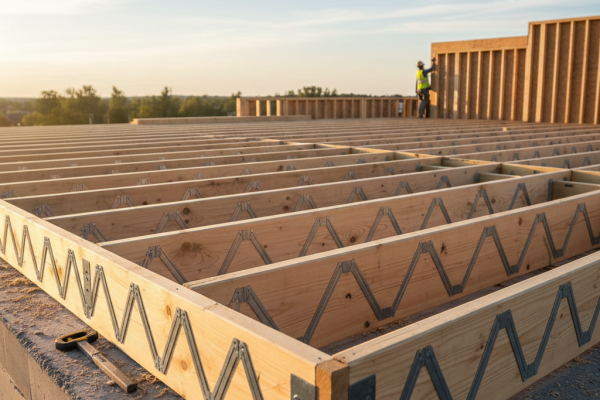
Floor trusses are custom-designed, open-web systems built from dimensional lumber connected with metal plates. They’re designed for a specific project, manufactured in a controlled facility, and delivered to the job site ready to install.

Advantages:

  • Open web design makes it easy to run plumbing, HVAC, and electrical without drilling.
  • Long spans (up to 30+ feet) with fewer bearing walls required.
  • Customizable depth and strength for any project.
  • Very stiff floors with less bounce or deflection.

Drawbacks:

  • Taller than I-joists, so floor thickness may increase.
  • Slightly more expensive upfront.
  • Heavier, requiring careful handling on-site.

What Are I-Joists?

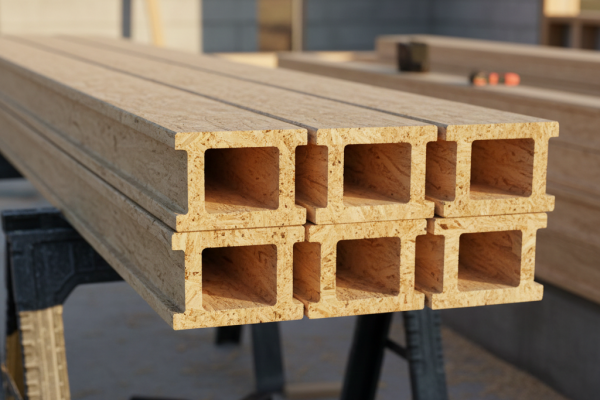
I-joists are manufactured components shaped like an “I”: top and bottom flanges made of LVL (laminated veneer lumber) or solid lumber, with an OSB (oriented strand board) web in between. They’re stocked in standard sizes and lengths.
Advantages:

  • Lightweight and easy to handle.
  • Cost-effective, especially for smaller spans.
  • Uniform, with minimal warping or shrinkage.
  • Widely available through lumber suppliers.

Drawbacks:

  • Limited in span compared to floor trusses.
  • Holes for mechanical systems must be cut carefully and are restricted in size and placement.
  • Can feel bouncier underfoot in some layouts.
  • Not project-specific — “one size fits most” approach.
Engineered Floor Trusses

Key Differences That Matter

  1. Span Capabilities
  • Floor trusses can cover wide, open spaces — ideal for modern Florida homes with open-concept layouts.
  • I-joists are better suited to shorter spans or designs with more interior bearing walls.
  1. Mechanical Integration
  • Floor trusses make it easy to run large ducts, plumbing, and wiring without cutting. In Florida, where HVAC systems run year-round, this is a big advantage.
  • I-joists require cutting holes in limited, pre-approved locations — risky if trades don’t follow specs.
  1. Moisture Resistance
  • I-joists use OSB webs, which are vulnerable to swelling if exposed to moisture.
  • Floor trusses are all solid lumber, less prone to delamination, though still requiring protection from prolonged moisture.
I-joists

More Points to Consider

  1. Deflection and Comfort
  • Floor trusses can be engineered for extremely stiff floors with minimal bounce — important for multi-story homes with tile or stone finishes.
  • I-joists can sometimes feel springy underfoot if not sized correctly.
  1. Cost Considerations
  • I-joists are usually cheaper upfront for standard layouts.
  • Floor trusses cost more to manufacture but may save money later by reducing labor for HVAC/plumbing routing and by requiring fewer interior supports.
  1. Customization vs. Stock
  • Floor trusses are engineered to the exact design of the home. Every detail — span, depth, loading — is tailored.
  • I-joists come in stock sizes, so designers must work within those limitations.
front-view-construction-roof-daylight

When to Choose Floor Trusses

  • You want wide, open floor plans with fewer walls.
  • Large HVAC systems need space for ductwork.
  • Luxury homes where floor stiffness and comfort matter.
  • Custom designs where standard components won’t fit.

When to Choose I-Joists

  • Budget is the top priority.
  • The design uses shorter spans or multiple bearing walls.
  • Trades are experienced in working with I-joist drilling limitations.
  • Project schedule benefits from using readily available stock components.

FAQ: Floor Trusses vs. I-Joists in Florida

Do I-joists meet Florida Building Code?
Yes, I-joists can meet code when designed and installed correctly. The challenge is ensuring proper hole placement for mechanicals and protecting them from moisture.

Are floor trusses stronger than I-joists?
Not necessarily stronger, but they can span farther and are engineered for each project. Strength depends on design, loading, and materials used.

Which is cheaper: I-joists or floor trusses?
I-joists are usually cheaper upfront. However, floor trusses can save labor costs during installation and mechanical routing.

Can floor trusses and I-joists be used together?
Yes. Some builders use I-joists in smaller rooms and floor trusses in large open spaces. Coordination with the engineer is essential.

What’s better for Florida’s humidity?
Floor trusses have an advantage because they’re all solid lumber. I-joists with OSB webs are more vulnerable to swelling if exposed to moisture.


Final Word

In Florida’s competitive housing market, the details matter. A floor system isn’t just hidden structure — it impacts comfort, durability, and long-term satisfaction.

At Park Place Truss Inc., we’ve been supplying Florida builders with engineered floor trusses since 1995. We help you choose the right system for your project, balancing code requirements, budget, and long-term performance.

Planning a multi-story build?

Talk to Park Place Truss about floor trusses engineered for strength, comfort, and Florida’s demanding climate.